What is the Wildebeest Migration Route?
The wildebeest migration route is one of the most spectacular natural events on Earth, a breathtaking journey undertaken by over 1.5 million wildebeest, accompanied by hundreds of thousands of zebras, gazelles, and other herbivores, across the vast plains of East Africa. This annual circular trek spans approximately 1,200 miles (1,900 kilometers) through Tanzania and Kenya, as the animals follow the rains in search of fresh grazing lands and water. The migration is a dramatic survival saga, filled with perilous river crossings, predator attacks, and the relentless drive to sustain life. Understanding this incredible phenomenon requires exploring its route, timing, challenges, and ecological significance.
The Stages of the Wildebeest Migration Route
The wildebeest migration follows a cyclical pattern dictated by seasonal rains and the availability of grass. While the exact timing can vary due to weather fluctuations, the general route remains consistent year after year.
1. The Southern Serengeti (December – March)
The migration begins in the southern Serengeti plains of Tanzania, particularly the Ndutu and Salei regions, where the wildebeest gather from December to March. This period coincides with the short rains, resulting in lush, nutrient-rich grasses—ideal for calving. Around 500,000 wildebeest calves are born within a few weeks, providing a brief abundance of food for predators like lions, cheetahs, and hyenas.
2. The Move Westward (April – May)
As the southern plains dry up in April, the herds begin their journey westward toward the Grumeti River in Tanzania. This phase marks the start of the long migration north. The Grumeti River presents the first major obstacle, where crocodiles lie in wait for the crossing. Not all wildebeest survive this treacherous passage.
3. The Northern Serengeti and Mara River Crossing (June – August)
By June, the herds push further north into the Serengeti’s western corridor before reaching the most iconic and perilous part of their journey—the crossing of the Mara River into Kenya’s Maasai Mara. This dramatic event, often featured in wildlife documentaries, sees thousands of wildebeest plunging into crocodile-infested waters while dodging predators on both banks. The sight of massive herds charging through the river is both awe-inspiring and harrowing.
4. The Maasai Mara (August – October)
Once in Kenya’s Maasai Mara, the wildebeest enjoy the lush grasslands until October. The Mara offers some of the richest grazing grounds, but it’s also a hotspot for predators. Lions, leopards, and hyenas take advantage of the dense herds, making survival a daily struggle.
5. The Return Journey South (November – December)
As the dry season sets in around November, the herds begin their trek back to the Serengeti, completing the cycle. The short rains rejuvenate the southern plains, drawing the wildebeest back to their calving grounds, and the process begins anew.
Why Does the Wildebeest Migration Happen?
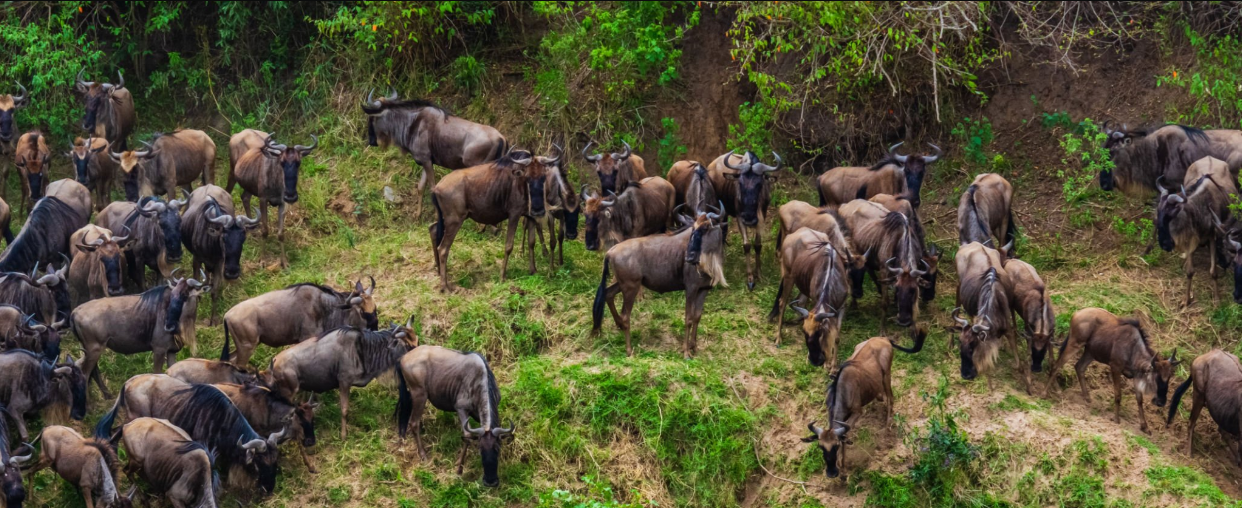
The migration is driven by instinct and necessity. Wildebeest rely on fresh grass, which flourishes after rainfall. Since East Africa’s climate is highly seasonal, the herds must keep moving to find sustenance. Their journey is a finely tuned response to environmental cues, ensuring their survival in a harsh landscape.
Additionally, the migration plays a crucial role in the ecosystem. The constant movement prevents overgrazing, while the wildebeest’s droppings fertilize the soil, promoting new plant growth. Predators depend on the migration for food, making it a cornerstone of the African savanna’s biodiversity.
Challenges Along the Migration Route
The wildebeest migration is fraught with danger at every turn:
- Predators: Lions, cheetahs, hyenas, and wild dogs follow the herds, preying on the weak and young.
- River Crossings: Crocodiles in the Grumeti and Mara Rivers claim hundreds of lives during each crossing.
- Starvation & Exhaustion: Some wildebeest perish from sheer exhaustion or lack of food and water.
- Human Threats: Expanding human settlements, fences, and roads disrupt traditional migration paths, posing additional risks.
The Best Places to Witness the Migration
For travelers, witnessing the Great Migration is a once-in-a-lifetime experience. Key viewing locations include:
- Ndutu Plains (Tanzania): Ideal for calving season (January – February).
- Grumeti River (Tanzania): Dramatic river crossings in May – June.
- Mara River (Kenya/Tanzania border): The most famous crossing point (July – August).
- Maasai Mara (Kenya): Prime time for predator action (August – October).
Conservation and the Future of the Migration
The wildebeest migration is a fragile phenomenon threatened by climate change, habitat loss, and human-wildlife conflict. Conservation efforts, including protected areas like the Serengeti National Park and community-based wildlife management, are crucial to preserving this natural wonder.
The wildebeest migration route is a testament to nature’s resilience and grandeur. This epic journey, shaped by millennia of evolution, remains one of the planet’s most extraordinary wildlife spectacles. By understanding and protecting this migration, we ensure that future generations can continue to marvel at the relentless, awe-inspiring movement of life across the African plains.