What to Wear on Kilimanjaro Trek? The Ultimate Packing Guide for Success
Kilimanjaro Clothing Essentials, Climbing Mount Kilimanjaro is a once-in-a-lifetime adventure that demands careful preparation, especially when it comes to clothing. The right gear can make the difference between an enjoyable summit and a miserable, potentially dangerous experience. What to wear on Kilimanjaro trek? The answer lies in understanding the drastic temperature changes, unpredictable weather, and the physical demands of the climb. From scorching heat at the base to freezing Arctic conditions at the summit, your clothing must adapt to every climate zone. This comprehensive guide will walk you through the essential layers, materials, and accessories needed to stay comfortable, dry, and warm throughout your journey to Uhuru Peak.
Understanding Kilimanjaro Clothing Essentials for Climate Zones
Mount Kilimanjaro features five distinct ecological zones, each with its own weather patterns and temperature ranges:
- Cultivated Zone (800m – 1,800m) – Warm and humid, with temperatures between 20°C to 30°C (68°F to 86°F).
- Rainforest Zone (1,800m – 2,800m) – Dense vegetation, high humidity, and frequent rainfall.
- Heath & Moorland Zone (2,800m – 4,000m) – Cooler temperatures, strong winds, and possible rain or hail.
- Alpine Desert Zone (4,000m – 5,000m) – Extreme temperature swings (hot days, freezing nights), dry air, and intense sunlight.
- Arctic Zone (5,000m – 5,895m) – Sub-zero temperatures, snow, ice, and thin oxygen levels.
Your clothing system must account for all these conditions while remaining lightweight, moisture-wicking, and breathable.
The Layering System: Key to Comfort on Kilimanjaro Clothing Essentials
The most effective way to dress for Kilimanjaro is by using a layering system, which allows you to add or remove clothing as temperatures fluctuate. The three essential layers are:
1. Base Layer (Moisture-Wicking)
The base layer sits directly against your skin and is responsible for keeping you dry by wicking sweat away.
- Material: Merino wool or synthetic fabrics (avoid cotton, as it retains moisture).
- Top: Long-sleeve or short-sleeve moisture-wicking shirt (pack 2-3).
- Bottom: Lightweight thermal leggings (for colder sections).
2. Mid Layer (Insulation)
This layer traps body heat to keep you warm in cooler temperatures.
- Fleece Jacket: A lightweight, breathable fleece for mid-altitude trekking.
- Down or Synthetic Puffer Jacket: Essential for higher altitudes and summit night.
- Convertible Pants: Zip-off hiking pants are ideal for transitioning between warm and cold zones.
3. Outer Layer (Weather Protection)
The outer layer shields you from wind, rain, and snow.
- Waterproof & Windproof Jacket (Hard Shell): A must for rain and snow protection.
- Waterproof Pants: Needed for wet conditions, especially in the rainforest and summit push.
Essential Clothing Items for Kilimanjaro
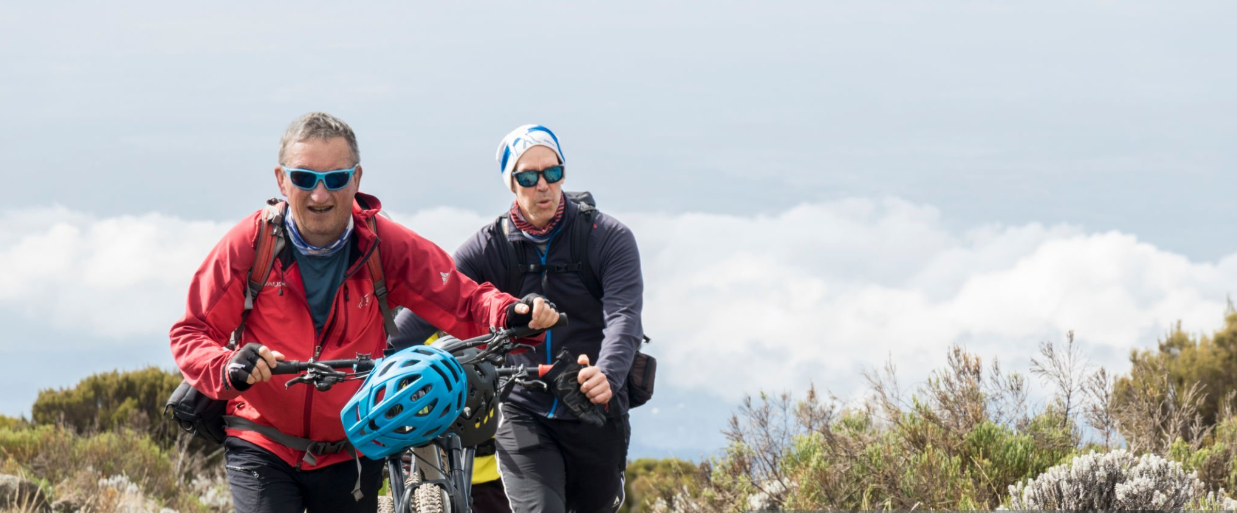
Headwear
- Sun Hat or Cap: Protects against intense equatorial sun.
- Beanie (Fleece or Wool): Crucial for warmth at higher elevations.
- Balaclava or Neck Gaiter: Shields face and neck from wind and cold.
- Buff/Headband: Useful for sun protection and sweat absorption.
Handwear
- Lightweight Gloves: For early mornings and mild cold.
- Insulated Winter Gloves or Mittens: Essential for summit night.
Footwear
- Hiking Boots: Sturdy, waterproof, and well broken-in (ankle support is key).
- Camp Shoes: Lightweight sandals or sneakers for resting at camp.
- Socks: Moisture-wicking liner socks + thick wool hiking socks (pack 4-5 pairs).
- Gaiters (Optional): Helpful for keeping debris out of boots.
Additional Clothing Essentials
- Underwear: Quick-dry, moisture-wicking fabric (avoid cotton).
- Sports Bras (for women): Comfortable and moisture-wicking.
- Sleepwear: Thermal base layers for cold nights.
Summit Night: The Ultimate Test of Your Gear
Summit night is the most challenging part of the trek, with temperatures dropping to -20°C (-4°F) or lower. Here’s what to wear for the final push:
- Top Layers:
- Moisture-wicking base layer
- Fleece jacket
- Down/synthetic puffer jacket
- Waterproof/windproof hard shell
- Bottom Layers:
- Thermal leggings
- Waterproof hiking pants
- Extremities Protection:
- Thick insulated gloves + glove liners
- Two pairs of wool socks (prevent blisters and frostbite)
- Balaclava + beanie + sunglasses/goggles (against wind and snow glare)
What NOT to Wear on Kilimanjaro
- Cotton Clothing: Absorbs sweat, leading to chafing and hypothermia risk.
- Jeans or Heavy Denim: Restricts movement and takes forever to dry.
- Street Shoes or Sneakers: Lack ankle support and waterproofing.
- Too Many Bulky Layers: Overheating can be as dangerous as cold.
Packing Tips for Kilimanjaro Clothing
- Use Compression Packing Cubes – Saves space and organizes gear.
- Roll Clothes Instead of Folding – Reduces wrinkles and maximizes space.
- Keep Essentials Accessible – Rain gear, gloves, and extra socks should be easy to grab.
- Test Your Gear Before the Trek – Wear boots and layers on training hikes.
Final Thoughts
Choosing the right clothing for Kilimanjaro is about balancing comfort, functionality, and adaptability. By following a smart layering system, investing in moisture-wicking fabrics, and preparing for extreme cold at the summit, you’ll significantly increase your chances of a successful and enjoyable climb. Remember, what you wear on Kilimanjaro trek can make or break your experience—so pack wisely, stay dry, and keep moving toward that glorious sunrise at Uhuru Peak!
Would you like recommendations on specific brands or a day-by-day packing breakdown? Let me know how I can refine this guide further for your needs!